
Short answer: yes, formal phonics is too early at 2 — but the foundation phonics is built on is exactly right for this age. Here's the difference, and what to actually spend your time on instead.
Why formal phonics doesn't work yet at 2
Phonics asks a child to hold a letter shape, its sound, and a word in mind at once, then blend them — a genuinely demanding mental juggling act. Most 2-year-olds are still building the pieces underneath that: telling sounds apart, holding attention on a sound game for more than a minute, and a vocabulary big enough to make the words meaningful. Pushing letter-sound drilling before those pieces are in place mostly produces frustration, not faster reading later.
What's actually right for this age
The real foundation is phonological awareness — hearing and playing with the sound structure of language, entirely without letters. It's the single best predictor of how easily phonics clicks later, and 2-year-olds are perfectly ready for the earliest, simplest layer of it.
5 daily activities that build the foundation
- Nursery rhyme time. 5 minutes of Twinkle Twinkle, Baa Baa Black Sheep, or Row Row Row Your Boat. Rhyme is the single best early predictor of later phonics success.
- Sound scavenger hunt. On a walk, name every sound you hear — a dog barking, a car honking, leaves rustling. This builds pure listening attention.
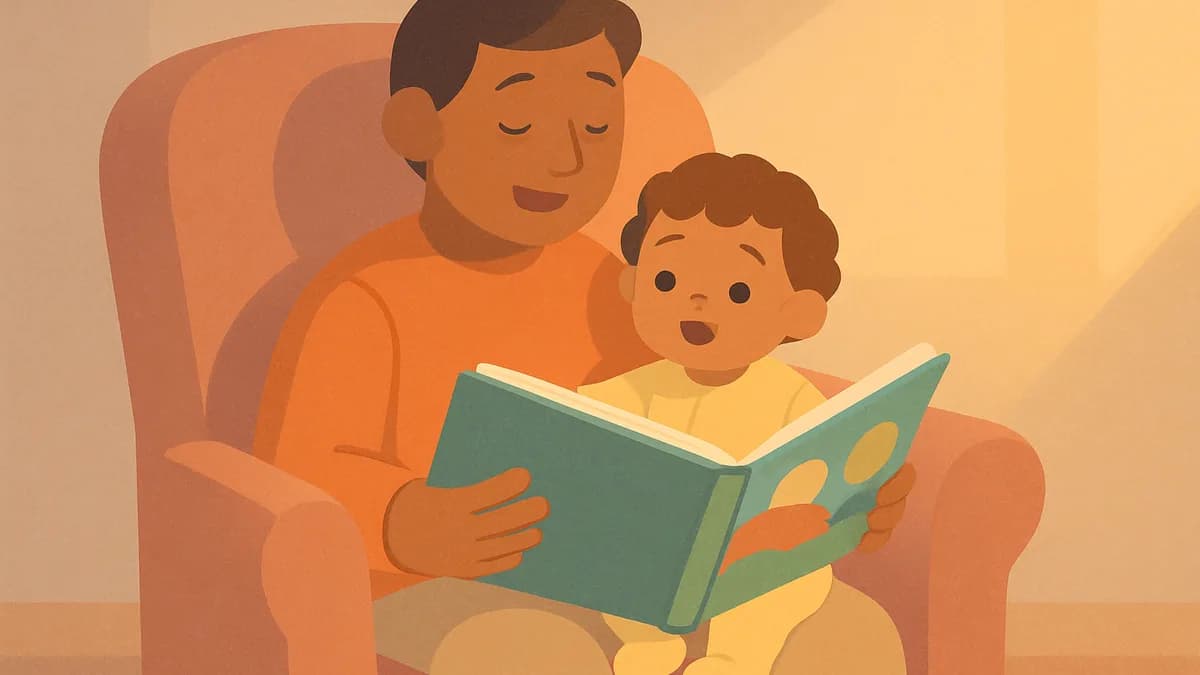
- Same book, every night. Repetition is a feature, not a problem — predictable text builds the sense that print carries meaning, before any letters are named.
- Silly rhyme games. "Does cat rhyme with hat? Does cat rhyme with dog?" Simple yes/no rhyme judging, no pressure to produce rhymes yet.
- Narrate everything. Talk through what you're doing out loud ("I'm pouring the milk") — vocabulary size at 2 strongly predicts reading ease at 5-6.
Signs your child is ready to move on from this stage
Most children are ready to start actual letter sounds somewhere between 3 and 4 — when they can play simple rhyming games, show real interest in letters unprompted, and sit attentively for a few minutes at a time. See our step-by-step guide to starting phonics with a 3-year-old for exactly what comes next.
For the complete phonological awareness ladder beyond rhyme — syllables, onset-rime, and full phoneme manipulation — see our phonological awareness activities guide.